
Slump
Reading for pleasure, reading for pain

A glimpse at my Goodreads tells me that this time last year I was reading The Gay Place and having a gay old time. I was also getting stuck in to a massive archive, meeting new people, and, even in freezing temperatures, it was sunny every day. Everything was new and nothing hurt. Now, I’m starting the year in the same old places, with the same old rain, and no glamourous research trips in sight. I am tired and my start-of-year reading slump shows it.
In January, I felt bruised and bored after a full month dedicated to reading Doris Lessing’s space fiction, a genre I’m not well aquainted with and which takes a diversion from what I usually enjoy in her writing. There’s a lot of food for thought in these books but don’t feel much love for them. While the folkloric storytelling, romantic landscapes, and universe-wide conflicts of Lessing’s Canopus in Argos series (1979-1983) provide much fuel for the next chapter of my thesis, where I’ll be exploring environmental collapse, cosmic community, and the bomb, I generally find her depictions of the future to be monotonous, and uninspiring.
So, this week I am putting together a reading diary in an attempt to trace what I’ve actually consumed since the start of the year, and hopefully reinject some joy into my reading practice.

Reading Diary, Jan - Feb ‘26:
All Will Be Well (2005). A good start. I eased into the new year with an audiobook of this memoir of a rural childhood from the ever-giving John MacGahern. Good in the calm and sad way of McGahern, he insists on telling the truth, so that the beauty of a nature-fulled boyhood in County Leitrim is disturbed but not totally corrupted by the honest account of an abusive father.
Inspired by the Lynchification of the London film scene (Cinema Year Zero and Arta Barzanji’s ongoing season at the Cinema Museum: Not By Lynch) I thought I’d struck gold on The Black Dahlia (1987) but the fun and glamour of noir crime was unfortunately overshadowed by a repetative plot. Not nearly as satisfying as the excellent films on offer from CYZ.
The Well of Loneliness (1928), my first teaching text on a new module about banned books, was promising. I enjoyed the charming caper of sympathetic young Stephen, her obsessions with housemaids and horseriding, her experiences of love and heartbreak. But, as the deadline to teach loomed, the combined misery of speed reading and simultaneous analysis sucked much of the joy out of this one.
Entering February, another film inspired (and suitably Valentine-ish) read was a winner: The Bridges of Madison County (1992). I’m not ashamed to say I had a little cry at Francesca’s letter to her children. This novel reminds me of Anne Tyler in its gentle, open portrayal of a relationship, and Robert James Waller’s depictions of the American small town farmland as both infinitely beautiful and lonely bring to mind another recent favourite, Annie Proulx’s Close Range (1999).
Finaly, I finished the Lessing sequance The Children of Violence. The Four-Gated City (1969) promised a good time as it brought the return of Martha Quest, my personal favourite Lessing heroine. The novel is a transition between Lessing’s realism and her move into space fiction: set in a tense and polarised Cold War London, telepathy and nuclear disaster warp an otherwise realist plot. Lessing’s writing about conflict and resistence, through Martha, is what first drew me to her novels. That ability to put a specific political feeling and time into literature still holds true in this later text, but I was dissapointed by a Lessing-esque tone encroaching on the narratorial voice, a sceptical lecturing voice whose flippancy and both-sidesing on subjects like the Mau Mau Rebellion is hard to stomach.
Somehow, I never read The Curious Incident of the Dog in the Night-Time (2003), making me perhaps the only teenager in Britain in the noughties who didn’t. When I’m really unmotivated to read, I have to go back to basics and pick something light and easy, but that doesn’t mean slop. In previous slumps nothing but a good Poirot would do. This time, I was inspired by the singularly nasty headline for an exerpy of Mark Haddon’s memoir in The Guardian to finally give his most famous novel a chance: ‘To say I was the favourite would imply I was liked’. An ideal book for when you have no motivation to read anything at all: short, fun, and a good mystery.
Next, Sunset at Blandings (1978): a promise of pure pleasure with a plot based around literature’s most glorious pig, the Duchess of Blandings, sadly interrupted by the author’s death just as the plot gets going. As much as I enjoyed the analysis by Richard Usborne of where Wodehouse might have been going, in a month where I was sick to death of academic reading, this didn’t quite quench my appetite.
At last, some hope: Devil on the Cross (1980) by Ngũgĩ wa Thiong’o. It’s the end of the month, but the latest book in my teaching to-read pile is finally showing me a way back to the satisfying meaty reading that I love. Five strangers meet in a cab in Kenya and agree to attend the Devil’s feast together. Immediately the premise draws me in, reminding me of one of my all time favourites, The Master and Margerita by Bulgakov, but also inspires a new direction in my Lessing research. Ngũgĩ’s use of song and parable to interrogate post(or neo)colonialism is close to Lessing’s techniques in the Canopus series I had struggled with. This book is reinvigorating all of my reading interests: teaching, research, joy. Phew.
Some more new beginnings…
Eating:
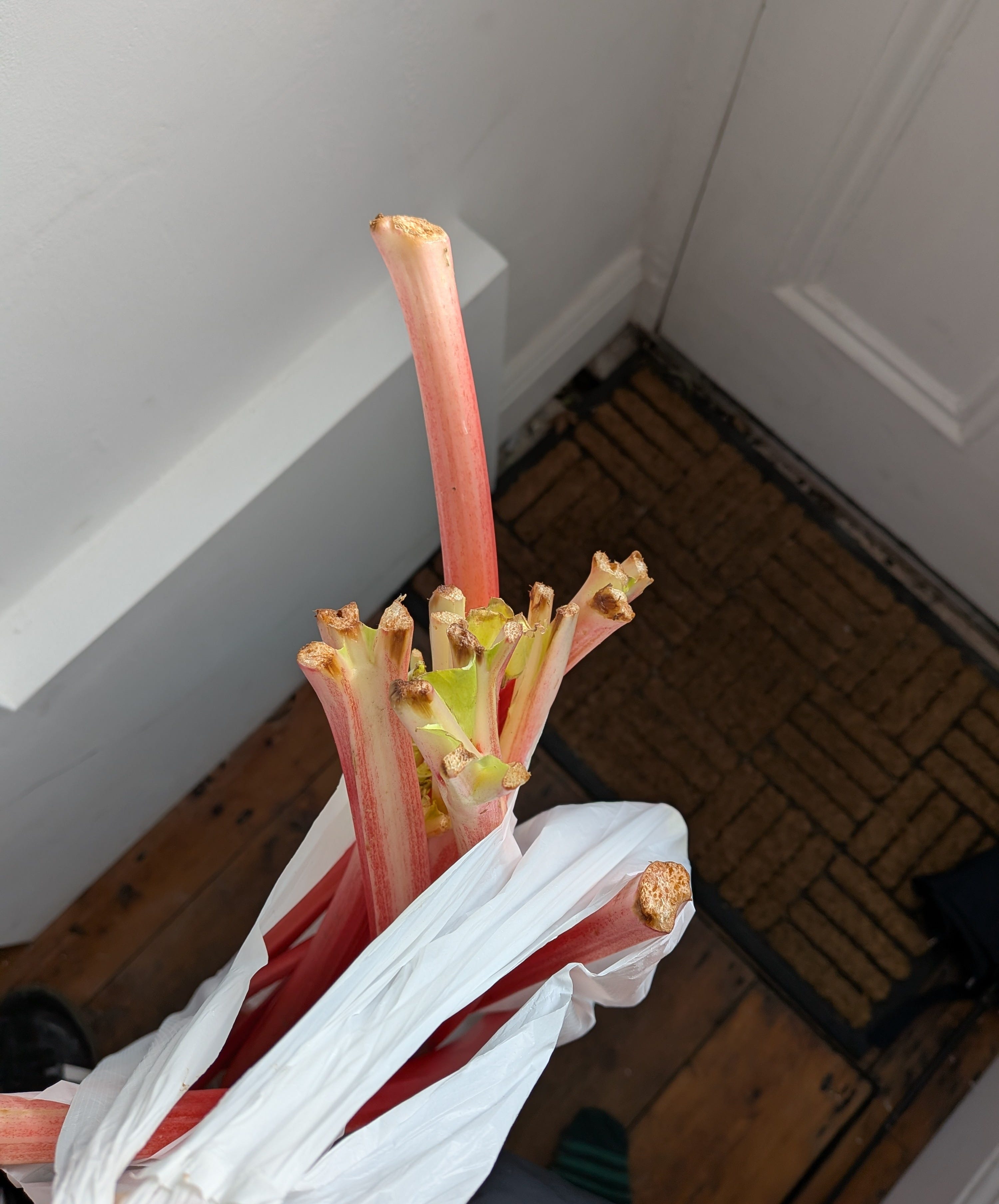
After years of staring at the section dedicated to this neon vegetable in Nigella Lawson’s Cook Eat Repeat (2020), I finally purchased some Yorkshire Forced Rhubarb! I used half (c. 500g) to make a version of my granny’s apple sponge: a buttered pyrex dish with rhubarb tossed in sugar at the bottom, followed by a sponge topping which almost caramelises as the juices bubble up in the baking process. This is apparently known in England as “Eve’s Pudding”, if you’re looking for a similar recipe. I froze the rest of the rhubarb to give myself some time to dream about what to do with it.
In Paris last week, we happened across an exceptional Morrocan restaurant, Chez Younice, on the way back from a flea market. Crowded between families and friends enjoying their lunch, I ordered chicken, lemon, and olives. The chicken skin and olives continued to toast on the hot tagine as I made my way through the dish. Sublime.
Watching:
Like a lot of others, I spent January in the radicalising glow of Frederick Wiseman, who died a few days ago on 16th February. I saw Belfast, Maine (1999), Aspen (1991), and Public Housing (1997) at the ICA.

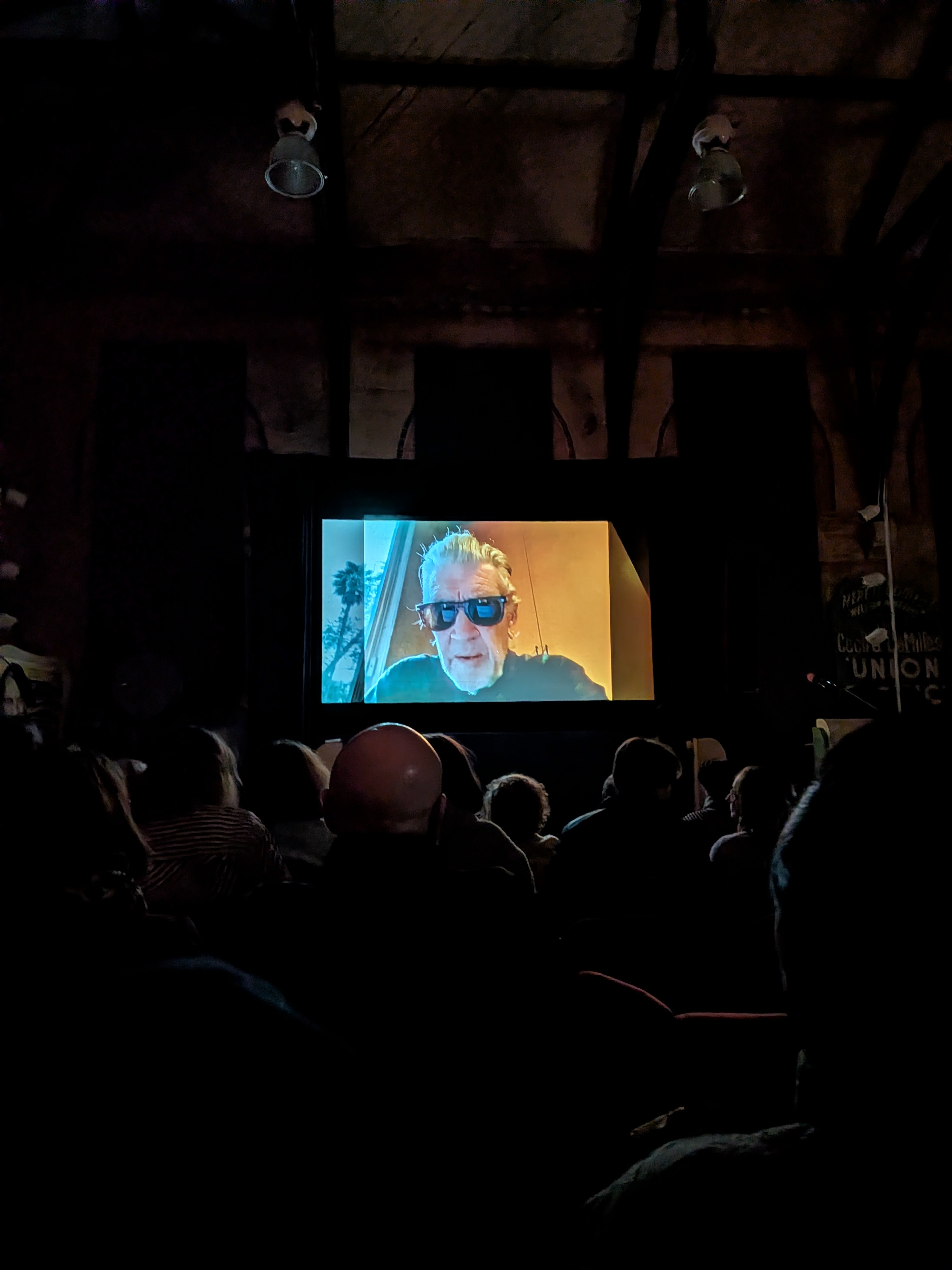
Obviously, I’ve been a consistent attendee of Cinema Year Zero’s Not By Lynch season at the Cinema Museum. This month’s installment - Kiss Me Deadly - was made even more special with a programme note from Alison Rumfitt.
Visiting:
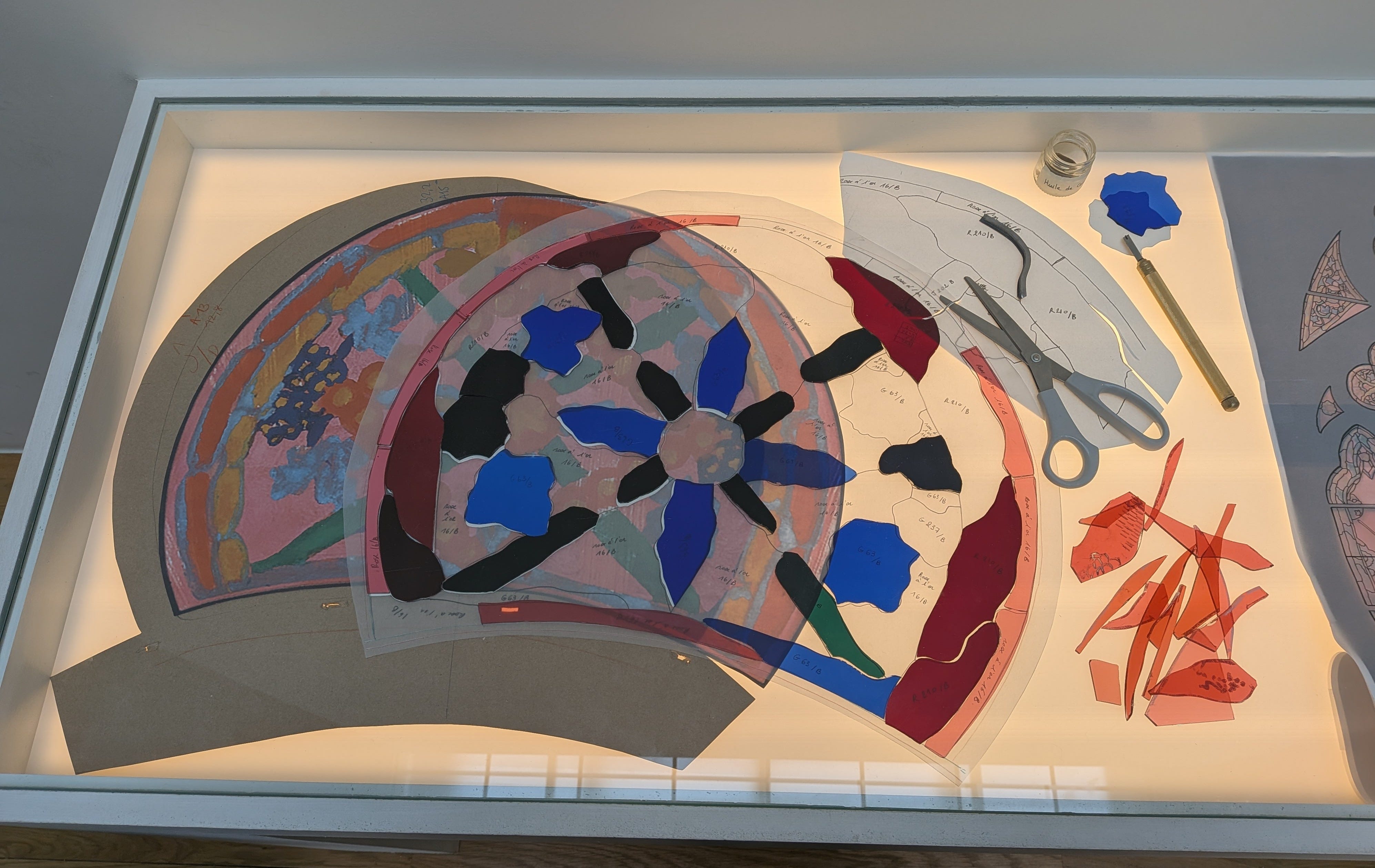
A trip to Paris for Ben’s birthday coincided with Clare Tabouret’s exhibition at the Grand Palais, D’un seul souffle: a behind-the-scenes look at designs for the new contemporary stained glass windows of Notre-Dame de Paris. Full-sized designs of magnificent colour featuring dancing women, waves, trees, glowing landscapes are complimented by smaller sketches and cases displaying the artist’s experiments with glass cutting and lead frames.


Devil on the Cross is one of my favourite books, glad it is reinvigorating you! Blew me away the first time I read it, and continues to every re-read. Also screenshotted that restaurant in Paris for future visitation